The Power of "Think Win-Win": Growing Leaders at Home
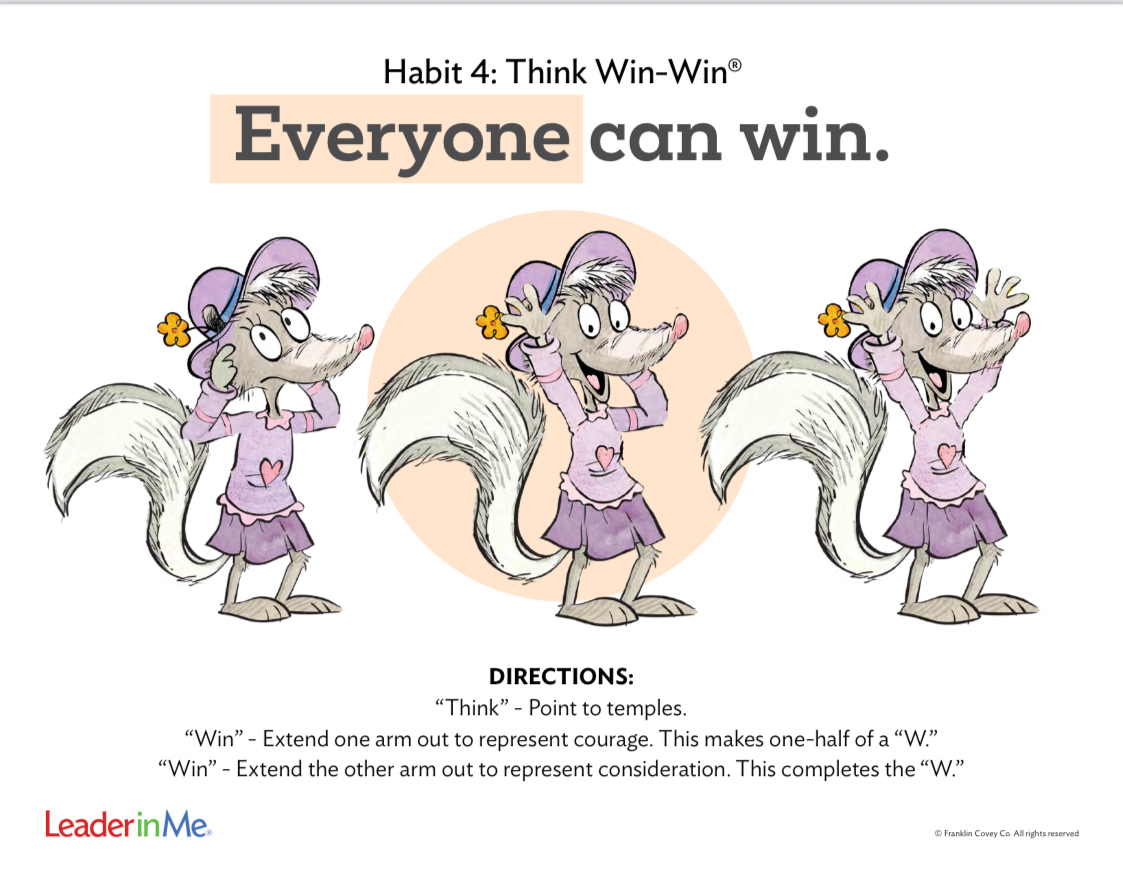
As we continue our journey with The Leader in Me, we are focusing on one of the most transformative habits a young leader can develop: Habit 4: Think Win-Win.
In many parts of life, we are taught that for one person to "win," another must "lose." However, Think Win-Win is the belief that everyone can win. It’s not about being "nice," nor is it a quick-fix technique; it is a character-based code for human interaction and collaboration.
What Does "Think Win-Win" Really Mean?
Think Win-Win is the frame of mind and heart that constantly seeks mutual benefit in all human interactions. It means agreements or solutions are mutually beneficial and satisfying.
It’s not Win-Lose: "I get my way and you don't."
It’s not Lose-Win: "I'm a peacemaker; I’ll let you have your way just to keep the peace."
It is Win-Win: "I care about my needs, and I care about yours. Let's find a solution that makes us both happy."
When children learn to Think Win-Win, they move from being self-centered to being empathetic and collaborative. They learn that life isn't a competition, but a cooperative arena.
Home Connection: The "Conflict Mapper" Activity
You can help your child practice this habit the next time a disagreement arises at home (like over screen time, chores, or what’s for dinner). Use this simple three-step guide to find a Win-Win:
1. The "I" Statement (My Win) Ask your child to state what they want and why.
Example: "I want to play video games for another hour because I’m almost at the next level."
2. The "You" Statement (Your Win) Ask your child to state what you (the parent) want and why. This builds empathy.
Example: "You want me to turn it off because you want the table cleared for dinner and you want me to get enough sleep."
3. The Brainstorm (Our Win) Together, look for a "Third Alternative." Ask: "Is there a way we can both be happy?"
Possible Win-Win: "If I clear the table right now, can I have 20 minutes of game time after dinner before my bath?"
Tip for Parents: Modeling is the best teacher. When you make a compromise or find a creative solution to a problem, narrate your thinking out loud: "I really wanted to go to the grocery store, but I see you're tired. Let's Think Win-Win: We'll nap now, and I'll go later while you help me make a fun snack."
By practicing Habit 4, we are teaching our children that they don't have to step on others to succeed. When we all win, the whole family leads better together!